
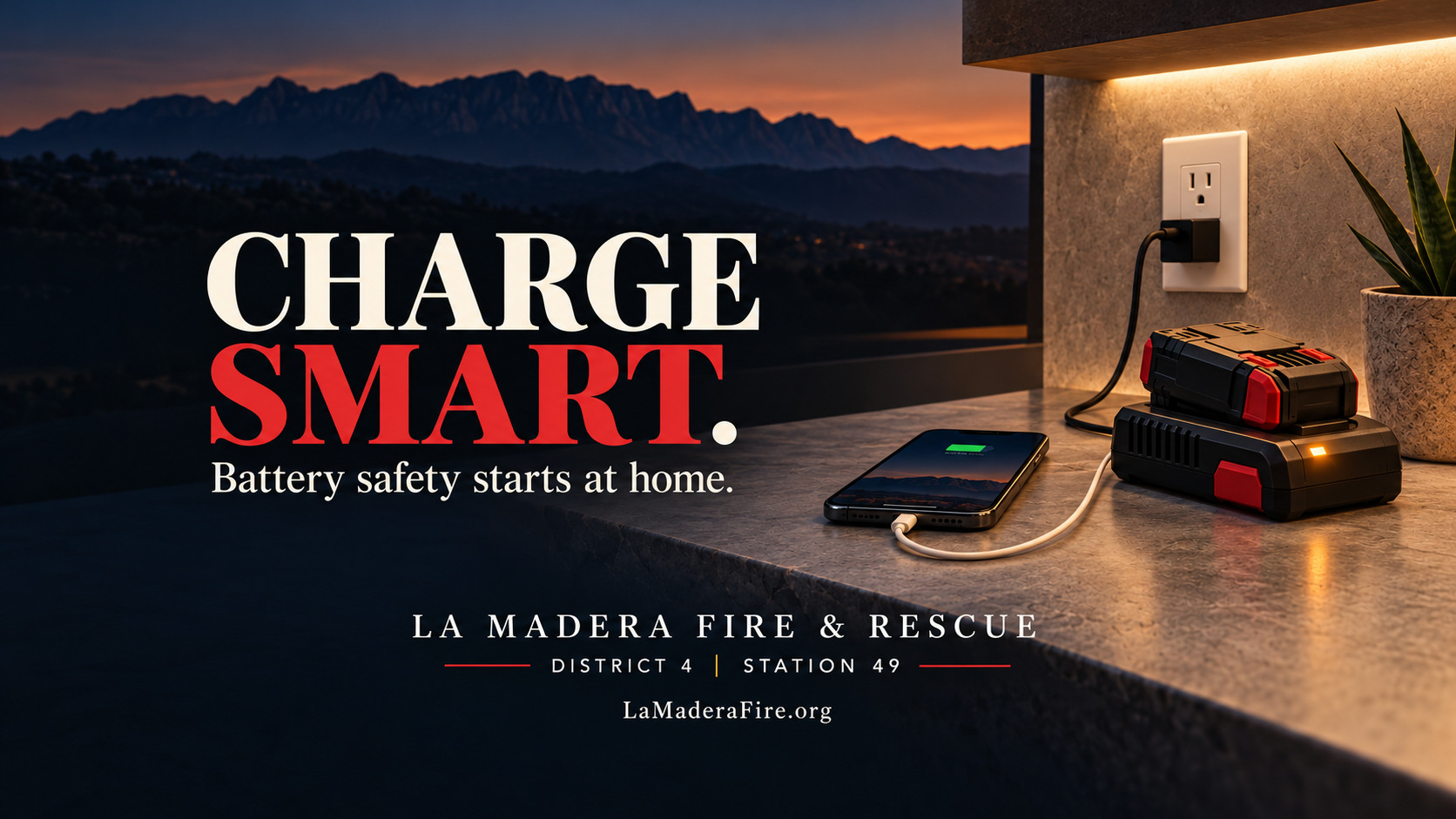
Neighbors, rechargeable batteries power many of the things we use every day, from phones and laptops to cordless tools and e-bikes. A few simple habits can help keep those devices working safely at home.
Start with the right equipment
Choose devices listed by a nationally recognized testing laboratory. Use the battery and charger specified by the manufacturer, and follow the product’s instructions. A charger that fits the connector is not necessarily compatible.
Give charging its own space
- Use a firm, flat surface away from anything that can burn. Keep phones and laptops off beds, couches, and pillows while charging.
- Keep doors, hallways, and escape routes clear. An e-bike or scooter should never charge where it could block your way out.
- Disconnect devices when charging is complete. Avoid leaving batteries charging while you sleep or when no one is home.
- Keep batteries out of direct sunlight and away from extreme heat or cold. Follow the manufacturer’s charging temperature limits.
Check the batteries in your garage, too
When you put away cordless yard equipment or power tools, check the battery case for damage. Follow the manufacturer’s storage instructions, and keep batteries away from combustible materials. Do not open, modify, or attempt to repair a damaged battery pack.
Know when to stop
Unusual heat, swelling, leaking, discoloration, a strange odor, or odd noises are reasons to stop using a battery. Do not keep charging it to see whether the problem goes away. Call 911 if a battery shows signs of failure.
If a device begins smoking or catches fire, get everyone out, stay out, and call 911 from a safe location. Do not pick it up to carry it outside or try to fight a lithium-ion battery fire yourself.
Keep batteries out of the trash
Lithium-ion batteries and devices containing them do not belong in household trash or curbside recycling. Take them to a battery recycler or household hazardous waste program that accepts them. Confirm acceptance before making the trip.
For undamaged, removable batteries going to recycling, cover exposed terminals with nonconductive tape or place batteries in separate plastic bags. For a swollen, damaged, or recalled battery, contact the manufacturer or collection program for specific handling instructions before transporting it. Do not force a built-in battery out of a device.
A quick check today
Walk through your home and look at where your family charges devices. Move chargers away from bedding, clear the exit routes, and check that each device has its correct charger. It is a small project you can finish today.
La Madera Fire & Rescue | Sandoval County Fire & Rescue
District 4, Station 49